
Postharvest and Crop Application
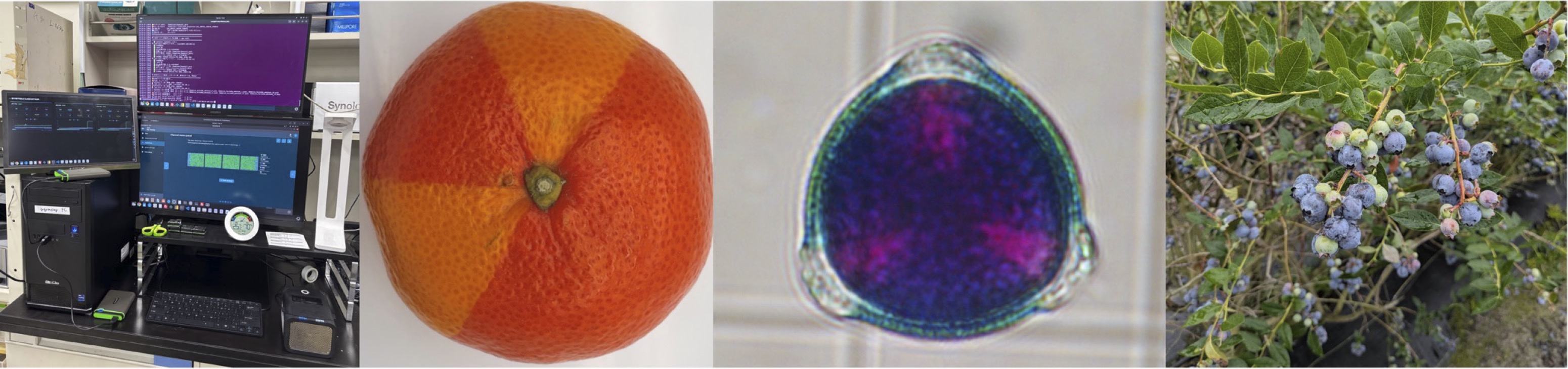
Our laboratory aims to elucidate, at the molecular level, the genetic diversity and quality of horticultural crops. Building on genomic analysis, we study the molecular regulation of fruit-ripening phenomena—such as ethylene biosynthesis, flesh softening, and pigmentation—as well as the mechanisms controlling pollen fertility and self-incompatibility, applying our findings to the breeding and utilization of fruit trees and vegetables including blueberry and peach. We are also developing genome-editing technologies for fruit trees. Through this research, we seek to develop technologies that help maintain produce quality and improve shelf life.
 |
|
|---|

RDP1: The world’s first gene discovered to control pollen number. Compared with the wild type, RDP1 genome-edited plants only produces half of pollen number.
Pollen number is a key trait directly linked to how many offspring a plant can produce, and plants actively regulate it depending on their reproductive strategy. In agriculture, crops that produce abundant pollen are desirable for good grain and fruit yields, while for people suffering from pollen allergies—like Japanese cedar pollinosis—plants producing less pollen would be welcome. Our lab studies the genes that control pollen number across diverse plant species, aiming to contribute to both agriculture and our life through this research.