
Environmental Amorphous Materials Science
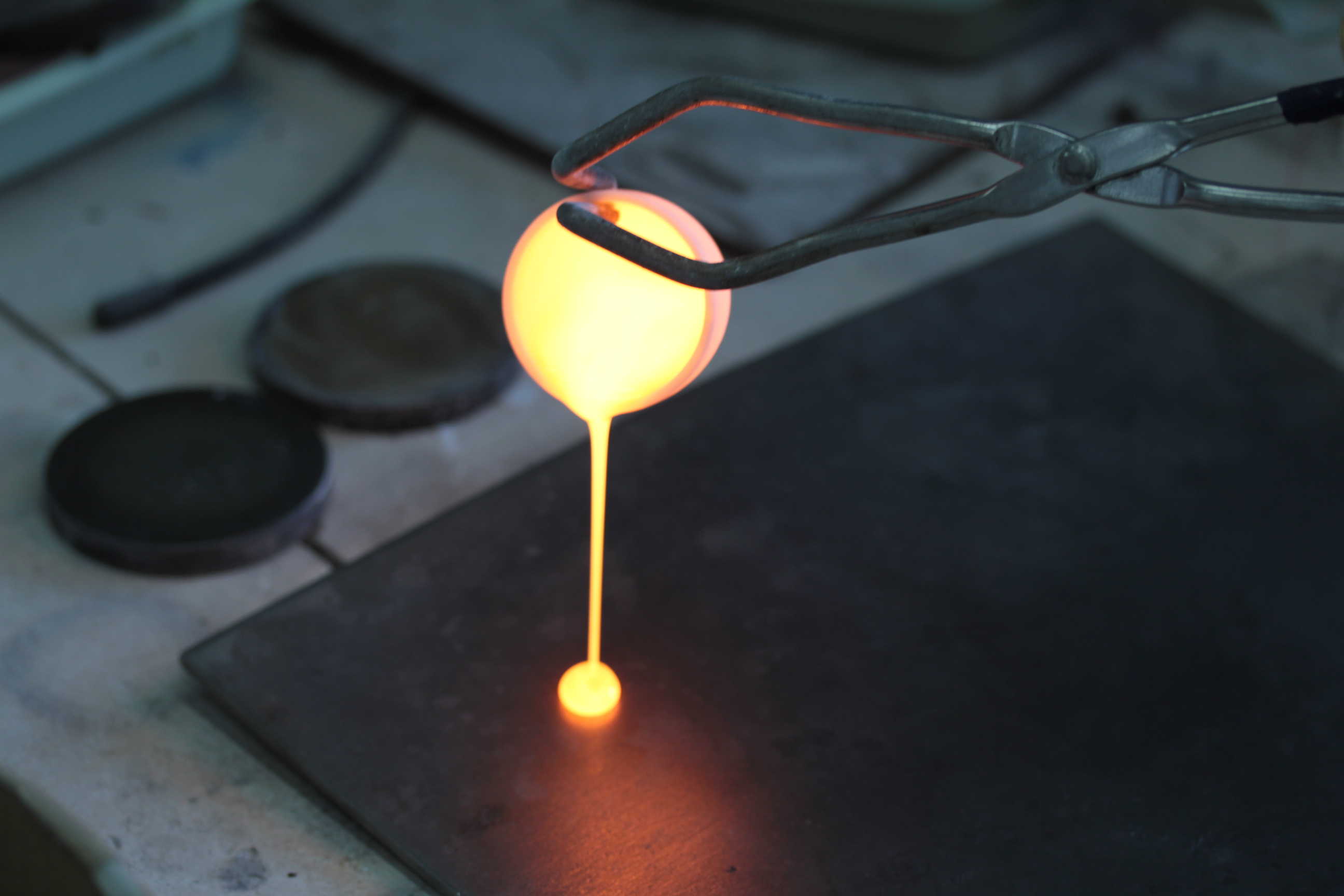
Glass has excellent properties of transparency and moldability, which gives it various applications used in our daily life such as clear windows, containers, bottles, lens and fiber-form optics and so on. Another advantage of glass is its ability as a solvent, which allows it to dissolve and retain various elements including toxic and/or radioactive ones. Glass can be a key material to solve environmental and energy problems. In our group, we contribute to resource and energy saving through the research and development of functional glass and ceramic materials. We are also studying on efficient process of recycling inorganic wastes based on physics and chemistry of glass materials.
 |
|
|---|
.jpg)
Structural model of candidate glass (inset) for immobilizing radioactive nuclide, I-129.
Glass containing heavy metal oxides (HMO) is attracting attention as immobilization technology of radioactive wastes and as environmental glasses with lead-free constituents. We know that glass has no regularity in its atomic arrangement, but there is a certain structural order over a short-range distance in atomic scale. In our group, we are studying on the structural modeling of HMO-containing glasses based on the structural analyses and the computer simulation techniques. We aim to elucidate the mechanism of material functions based on the reproduced structure and feed it back to the development of new materials in glassy form.