
Interface Process Engineering
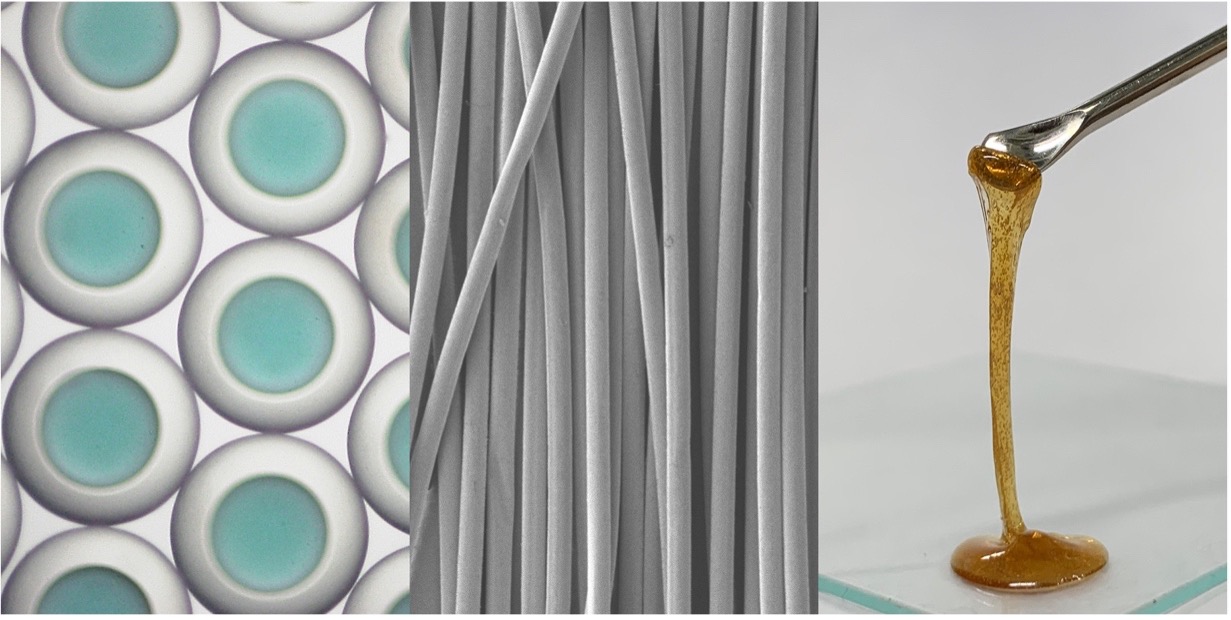
With a focus on process innovation as a driver for product innovation, our laboratory pursues interdisciplinary research based on chemical engineering approaches, integrating diverse fields through the key concept of interfaces. By combining polymer chemistry, biotechnology, organic synthesis, microfluidics, and computational science, we explore the multiscale design of functional soft-matter —from molecules to structures—including particles, capsules, fibers, and ionic liquid–based materials.
 |
|
|---|
 |
|
|---|
 |
|
|---|
Development of functional colloidal materials using microfluidic technology
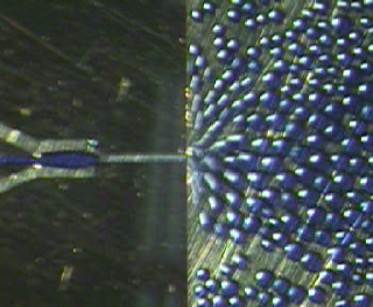
Microfluidic channel is a general term for a channel that has a thin channel about the size of a hair. The fluid flowing in a microchannel is laminar due to its low Reynolds number. Therefore, the microfluidic channel is a favorable environment for the formation of uniformly sized droplets and stable jet flow. We develop processes to prepare microparticles and nanofibers using uniformly sized droplets and jet flows formed in microchannels as templates.
Development of ionic liquid-based functional materials
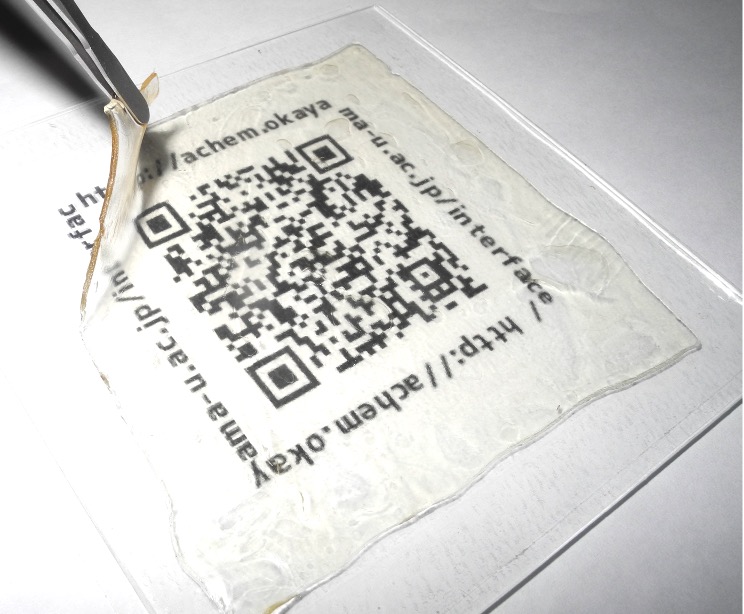
We develop functional materials showing ionic liquid properties such as tunable physicochemical properties, ionic conductivity, carbon dioxide absorption properties, and thermal resistance.
Simulation Analysis for Functional Material Design
We conduct research to elucidate the mechanisms of phase separation and crystallization within droplets generated in microfluidic channels, as well as the behavior of molecules and functional groups in polymer materials and gels, by leveraging molecular and numerical simulations. Building on the insights gained, we aim to establish new design guidelines for the creation of functional materials and the precise control of their properties.